Throughout lockdown, reports have been mounting of a Ghostbuster on the loose around Glasgow. I caught up with the Ghosbuster himself to find out why.
Stuart Cherry, 22, has raised over £2000 for the charity Starchild since he began touring Glasgow in his homemade costume, shaking a collection tin.
Stuart decided that Ghostbusting was for him when he learned that Ghostbusters star Dan Ackroyd is autistic, like Stuart himself. He went on to create his own costume, building a Proton Pack with music and sound effects and putting his own moniker on the flight suit. He says cosplay is a great way to cheer people up, feel accepted in a community, and raise money for causes he cares about.
He has now started his own cosplay group, Crossing Franchises, and wants to encourage more people to get involved in his unusual hobby.
But it’s not just landlines. Despite a year of being kept apart due to numerous lockdowns, the British public have cast aside telephone calls in favour of Zoom, Discord and various other means of online communication.
So it may be a common refrain that we’re all addicted to our phones–but it seems the majority of us don’t actually like using them as telephones.
But it wasn’t always like this.
A 2019 survey found that 76% of millennials feel anxious when their phone rings, compared to just 40% of the “baby boomer” generation. This suggests that, while phone anxiety has likely existed in some form ever since the telephone was invented, the fear we feel today is a recent phenomenon.
“I remember that it used to be quite exciting when I lived in a shared house and the phone would go,” says 40 year old Mhairi. “Everyone would hope it was for them. Does anyone like phone calls these days? When did phones become awful?”
It’s a reasonable question. Television and films from decades past show teenagers happily telephoning their friends. Less than twenty years ago, we spent actual money getting our phones to make cool sounds specifically when somebody called us on them. When and how did phone calls become the enemy?
I didn’t ever socialise on the phone. I’m technically the youngest end of millennial, or possibly sandwiched between the generations as a “Zillennial”. At 30, my partner is undeniably millennial and will regularly phone his friends to catch up with them, just as he has done since childhood, while I cringe at the thought of being so antisocial as to cause my friends’ phones to make anoise (the horrors).
remember when you had to pay for ringtones now i would throw my phone out the window if it made a single sound
My theory is that having so many calls on our attention (Facebook, texts, WhatsApp groups, Twitter, Tiktok) means we want to control for ourselves when and how we deal with all that information. We certainly don’t want to receive a further batch of information without any prior warning or control.
Additionally, now that socialising has moved to other platforms, phone calls are more often composed of information about work, or life admin, rather than a nice catch-up with someone you know.
Now, if the phone goes, I think “Oh no—I’m about to get an influx of stressful information against my will.”
Does it have to be this way?
I personally have never been in the habit of making phone calls, except for work…until a few months ago.
Temporarily, I lived with Wifi in only one room of the house and no phone signal at all. The house had a corded landline, and the only people who had the landline number were members of my family.
When the phone rang, just as if it were the 1990’s, I rushed to answer it. To my intense surprise, I found that being on the phone was an incredibly relaxing way to communicate. Being tied to the landline meant that I couldn’t walk around looking at other things, or get distracted by notifications, while I was talking—I had to focus my whole attention on the conversation I was having. My entire mind focussed in on that one voice.
It makes sense in a way. Information overwhelm is so common in the modern world that whole movements have sprung up to try to tackle it using precisely this method: focussing on the present. Mindfulness, for example, is a hugely popular psychological practice based on grounding your thoughts in the present moment. A popular Youtube trend is “slow living” videos, where you can watch somebody making a cup of tea or walking through the woods without any more information or narrative. BBC Four and Radio 4 have carried out their own versions of Slow TV and Slow Radio respectively. Focusing your whole attention on what you’re doing, and blocking out other streams of information, seems to be great for mental health—and a popular way to unwind.
I was surprised how relaxing it was to use a phone. Maybe we will never go back to landlines–but maybe there is still a case for the humble phone call.
What do you think? Can phone calls be a relaxing experience again, or are they always going to be daunting?
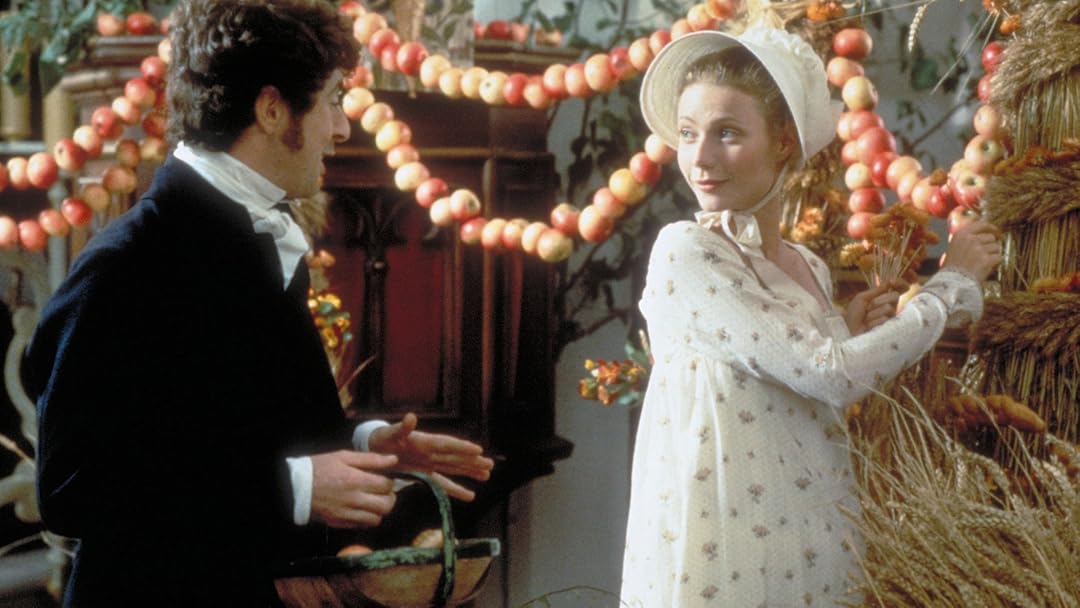
Full of symmetrical shots, beautiful actors, soft pink tones and colourful flowers and fruits, this version of Austen’s tale is staggeringly pretty–in a sort of insipid, instagrammy sort of way. I suppose you could take that as a reflection of the notorious heroine but unfortunately I don’t think it’s actually that clever.
Paltrow seems like a natural choice to play the lead–even if she hadn’t started selling vagina candles and crystal dildos back in 1996, she was already exuding that type of energy. It should work a treat for the silly, overprivileged Emma.
But it doesn’t. Paltrow’s Emma is humbler, politer, and more obviously well-meaning than most of her counterparts and therein lies the fatal flaw–there just isn’t that much of an arc. The whole point of Emma’s story is her redemption arc and personal growth, so by setting her up as a very kind person from the beginning, the film asks us to invest an awful lot of interest in the correction of some minor character flaws. If you’re unfamiliar with the premise and this is the first time you’ve encountered this plot, you may well spend most of the film wondering that fatal question, “Why am I watching these people?”
Toni Collette gives a competent performance as Harriet but, through no fault of hers, it doesn’t quite work. She was 27 when she played the role, and looks every bit of it. She can’t quite put across the sweet and naive schoolgirl that Harriet is supposed to be so she’s being a Regency Muriel Heslop. It’s not bad per se–it’s just that the story of a calculating rich woman manipulating the life of a naive schoolgirl who’s both younger and several stations below her in rank doesn’t come across.
The looks of the film are excellent, but what it lacks in substance can’t be restored in pure aesthetic.
High point: There’s a literal thunderclap-plus-camera-shift moment when Emma receives a shocking bit of news, which briefly tips the film into so-bad-it’s-good territory. Also, infuriatingly, Sophie Thompson is the best Miss Bates–actually the only Miss Bates who gets the perfect balance of being irritating and sympathetic–so it’s a shame she’s in the worst adaptation.
Low point: I mean really the whole first half of the film. I know what the point of the story is, and even I was wondering what the point of the story is. It’s not clear at all what’s being set up or where it’s going, and that’s not really forgivable.
4. Clueless (1995)
I know. I’ve got 90s kids clutching their chokers and shell necklaces all over the place. How could I put Clueless in fourth place?
I was born in ’94, making me an elder Zillenial with barely sketchy memories of the 90s and not a whole lot of nostalgia for this. I don’t hate it. It’s fun. I respect its cultural weight for people who are really really into the nineties. It doesn’t really tap into the potential of a modern-day Emma though.
I think it would have been nice to see a modern day adaptation of Emma where Emma is, yes, a very spoiled and overprivileged rich girl–but also a girl who is intentionally limiting her own life choices because she’s a carer for her bereaved and clinically anxious father. That would be not only a more accurate translation of the original premise, but a much more interesting idea for a character. Cher doesn’t actually have a whole lot of redeeming features, besides being cute as a button. Her concern for her father is genuine, but given that he’s a successful lawyer in his own right, it’s also not really that warranted.
Also, the points in the story where Emma gets knocked off her high horse have kind of disappeared. There’s no Miss Bates for her to belittle, no Jane Fairfax to bully, and Frank-Churchill-of-sorts just turns out to be gay which doesn’t really teach anyone anything. Tai is as fickle with her affections as the original Harriet–but in the twentieth century context, what that means is there’s no reason to care about the loss of a relationship she soon forgets anyway. In the Regency period, that relationship could have been her one ticket out of a life of drudgery, but in the 1990s it’s pretty trivial and no real reason for Cher to lose sleep. Cher’s whole motive for change therefore gets funnelled into her desire to impress a guy.
And what a change it is. Cher….starts a collection for charity. It’s nicer than not doing that, sure, but she’s doing it to get a guy. Even original Emma before her transformation used to visit the poor.
What else? Oh yeah. Josh is her ex-stepbrother rather than her brother-in-law’s brother which is fine I guess. It’s simpler and quicker to explain and allows more time in the film for Cher to give us her views on low-waisted pants.
High point: Alicia Silverstone and Brittany Murphy both put in really really cute performances. They’re really the whole reason this film is so iconic.
Low point: Me getting Fancy by Iggy Azalea stuck in my head.
3. Emma (2020)
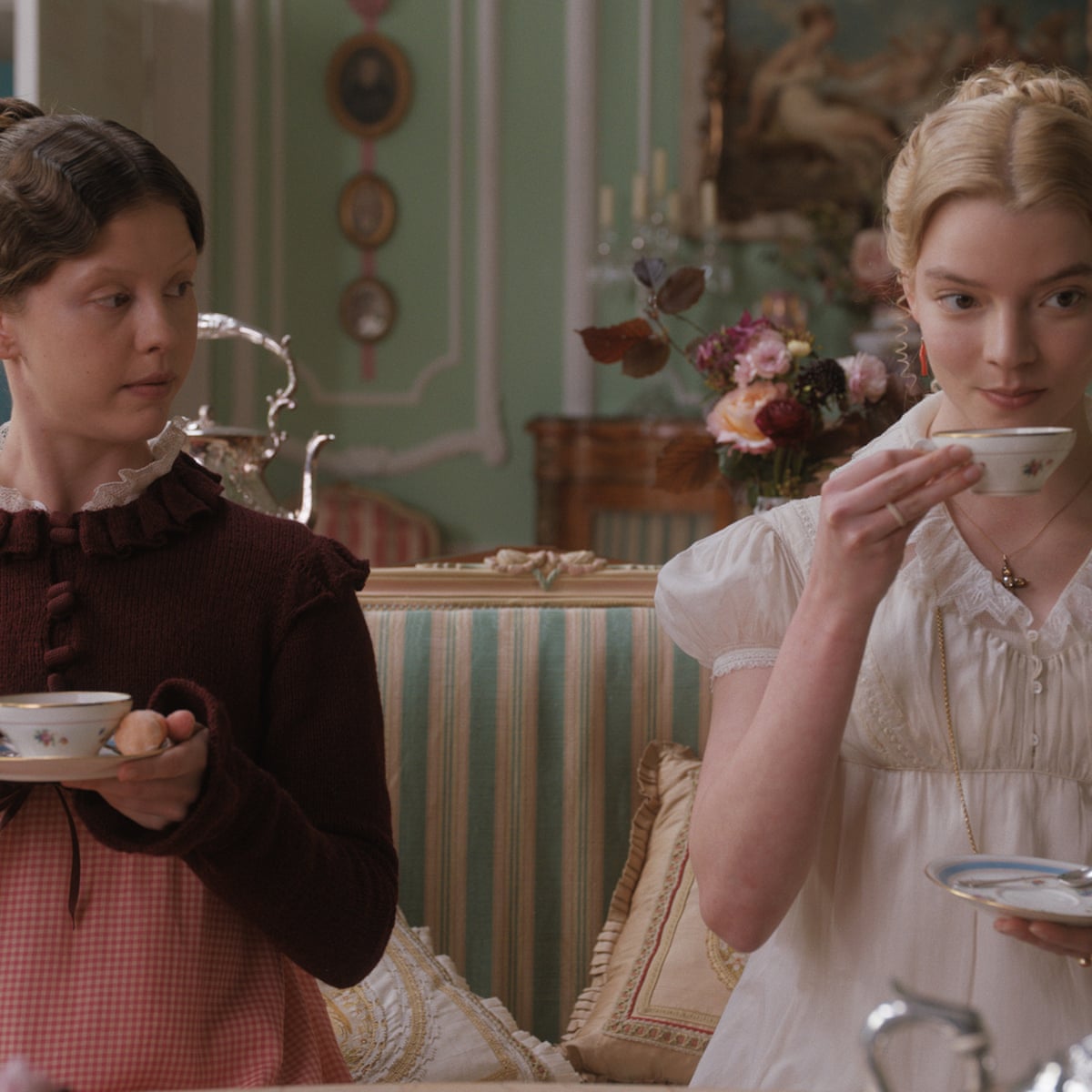
There’s a lot to admire about this film. Plenty of people have written about the excellent costumes, the colours, the cinematography. It’s extremely well made.
It’s also somehow a bit lacklustre. Anna Taylor Joy plays a sneery and huffy version of Emma who’s certainly hard to like, but also hard to feel more than lukewarm dislike for. Her motivations throughout most of the film don’t feel all that clear and it all ends up feeling like the focus on the film is on the wrong character.
That’s because Mia Goth is an excellent Harriet. She presents as beautiful but strange, vulnerable, weepy and unsure of anything. Unique to all the adaptations, a scene is created where she tells Emma that she has found out who her real father is and that he wishes to connect with her and support her and….honestly I’m left thinking that the film should have been about that. Wouldn’t it be nice to see an adaptation of Emma called Harriet, exploring the stigma and uncertainty of being an illegitimate teenage girl in the Regency period? I’d watch it. It would certainly be something new.
Johnny Flynn is a very pretty Mr Knightley and we get to see plenty of him in every sense. If you like that sort of thing, this might be the adaptation for you. I don’t know if a gratuitous arse-shot should be the most memorable moment from a film though. In terms of memorable moments, there’s also a really weird scene where Emma is so distressed by some thoughts in her head that she…gets a nosebleed. It is so so weird. I mean it is so weird. Some people like it as a symbolic moment, but I find it clumsy and clunky and bad. It’s really not befitting how elegant the film is in general.
High point: Definitely Mia Goth. She’s just perfect in this role and really got my imagination firing about Harriet’s life story.
Low point: The nosebleed.
2. Emma (1996)
This TV movie is considerably less flashy than its opponents, and it doesn’t really do any clever trickery to work around that either. It looks as cheap as it is, with some pretty ropey-looking 90s “flashback” effects when Jane remembers her life being saved the previous summer.
Why then does it place so high on the list? Simple: it really, really knows what story it’s telling, and it goes all out to tell it.
Kate Beckinsale plays a positively loathsome Emma: cold, manipulative and arrogant. Ray Coulthard as Frank Churchill does a wonderful turn as the devil on her shoulder, egging her on to victimise the defenceless Jane for their shared amusement. Mark Strong as Knightley takes up the other shoulder, playing a pious sort of angel. He veers readily into sanctimony and beratement, but ultimately taps into Emma’s hidden conscience. Right away, I know exactly who all these characters are to each other, what they’re doing in the story, and why I’m interested.
Prunella Scales as Miss Bates is chatty and kind and eminently likeable–maybe just a little bit too likeable. Miss Bates isn’t very annoying in this adaptation, which makes Emma’s treatment of her seem particularly unwarranted. But then, the potential faults cancel each other out: if Emma seems too cruel in this version, you’ll enjoy seeing her get shut down by the most uncompromising Knightley there is. Or you’ll just end up hating both of them. Either way, you won’t be bored.
High point: Emma is such a snake in the scene where she dissuades Harriet from getting engaged. It’s a lot of fun to hate her.
Low point: That flashback scene really does look a bit ropey.
Emma (2009)
Let’s not beat about the bush: this adaptation shouldn’t work. It really really shouldn’t. But somehow it does.
I was so ready to hate it. The opening narration is horrible. This is the opening narration:
Emma Woodhouse was born with the sun shining, to a father who always expected the worst and a carefree mother whose smile Emma was not to remember. One day the worst did happen. And as he watched his wife leave home for the last time, Mr Woodhouse resolved never to let his daughters out of sight again.
This trite, clunky text is such a confusing flaw for this programme to have, because it didn’t have to happen. I mean. You guys know this is a book, right? Somebody already wrote this as a book. Two centuries ago, in fact. Why not just use that? It would be possible to edit out chunks of text and still preserve the elegance of the prose, rather than write this sloppy nonsense.
On basis of this opening scene I was absolutely ready to despise this adaptation, but it turns out the rest of it really works. There are a couple of strange choices that make it rough around the edges (including some very weird quirky scene transitions that seem to have found their way in from a CBBC sitcom, and some colour grading that makes the greens VERY green for no clear reason at all). But its extra run-time–it’s about twice as long as any other adaptation on this list–gives it plenty of space to explore each character. And after the terrible prologue, none of it feels either rushed or padded.
Of all adaptations, this interpretation of Emma really leans into the emptiness and loneliness of her life. Her concern for her father is so deeply real and truly felt, she really believes it precludes her from ever marrying–and she has never been outwith her own village, a village in which there’s never even been a dance since there aren’t enough young people to make it worthwhile. When Emma sees a room lit with pretty lanterns, her eyes light up with wonder; she’s never seen anything like it. She’s never seen the seaside. She never expects to marry or travel outside of her town. She loves her family wholeheartedly and she enjoys plenty of material luxuries–but she’s bored stiff, with little hope of her life ever changing. No wonder she starts messing with people, especially when her naive and egotistical worldview leads her to believe that it’s in their best interests.
It’s a wonderfully nuanced portrayal of a complex character, and it’s managed with enough charisma that it’s not boring to watch. Emma is not terribly likeable, but she’s likeably terrible, and this is the only adaptation that really achieves that. Romola Garai’s Emma is gregarious, petulant, bored, jealous, curious, caring, careless and loving. None of the traits lessen any of the others and it all comes together to form a totally coherent person.
And really, every bit of casting is equally excellent. Michael Gambon is wonderful as Mr Woodhouse, a role that could have been designed just for him. Johnny Lee Miller’s Knightley teases out the various aspects of Emma’s character, while taking on board some improvements himself. The contrasts between their perspectives are more nuanced in this adaptation, which has the time and space to explore them: Knightley is confronted with his own snobbish attitudes towards Harriet and checks himself accordingly And Louise Dylan is an excellent Harriet, a happier one than Mia Goth but full of innocence.
This one really captures the essence of the story, and for that I can forgive its little flaws.
Low point: That narration. I mean really. What an abomination.
High point: The rest of it, give or take. It’s a great show and you should watch it.